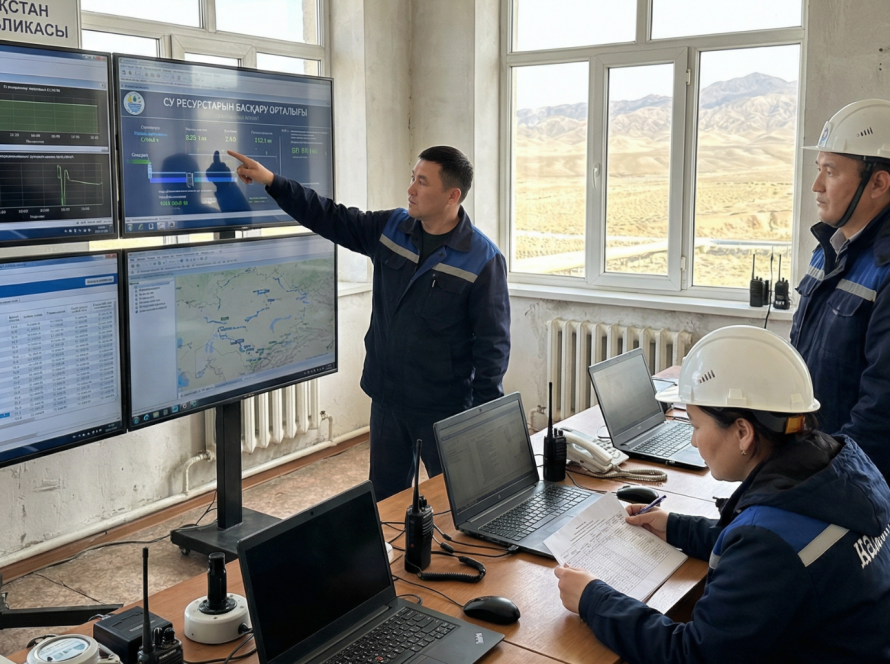
The global water sector is entering a decisive era of transformation. As climate volatility, urbanization, and aging assets converge, smart water infrastructure is emerging as a strategic priority for governments, utilities, and industrial leaders worldwide.
The global smart water management market is projected to grow from US$22.6 billion in 2026 to US$50.9 billion by 2033, registering a 12.3% CAGR. This growth reflects a fundamental shift: water systems are no longer managed reactively-they are becoming digitally intelligent, predictive, and resilient by design.
For C-suite executives, this evolution signals more than technology adoption. It marks the modernization of one of the world’s most critical infrastructure systems.
From Physical Networks to Digital Water Infrastructure
Smart water infrastructure integrates IoT-enabled sensors, advanced metering infrastructure (AMI), cloud platforms, AI analytics, and automated control systems across the entire water value chain-from source and treatment to distribution and consumption.
This digital layer enables utilities and industries to:
- Detect leaks and losses in real time
- Reduce non-revenue water (NRW)
- Optimize asset performance and energy use
- Strengthen regulatory compliance and ESG performance
As water stress intensifies globally, data-driven control is becoming essential to water security and economic resilience.
Market Momentum Driven by Scarcity and Infrastructure Risk
The primary driver of smart water infrastructure adoption is global water scarcity, compounded by population growth, climate change, and deteriorating legacy networks. Utilities lose billions annually due to NRW, while industrial users face rising regulatory and operational risks tied to water use.
Industries and utilities currently account for over 60% of market demand, reflecting the scale of infrastructure investments required. North America leads adoption, driven by modernization funding and regulatory pressure, while Asia Pacific is the fastest-growing region, fuelled by rapid urbanization and national water programs in China and India.
Technology Shaping the Future of Water Systems
The next phase of smart water infrastructure is defined by intelligence, not just connectivity.
- AI and machine learning enable predictive maintenance, demand forecasting, and autonomous system optimization
- Cloud-based analytics transform raw sensor data into actionable insights
- Digital twins allow utilities to simulate system behaviour before failures occur
This shift reduces operational costs, improves service reliability, and extends asset lifecycles-critical outcomes for capital-intensive water networks.
Strategic Implications for Global Leaders
For executives across utilities, manufacturing, real estate, and smart cities, smart water infrastructure is becoming a board-level concern:
- Operational resilience in a water-constrained world
- ESG and sustainability performance tied directly to digital monitoring
- Capital efficiency through reduced losses and predictive maintenance
- Urban competitiveness, as cities integrate water into connected infrastructure platforms
Water is no longer a passive input. It is a digitally managed strategic resource.
The Road Ahead
While adoption barriers remain-including upfront capital costs, cybersecurity concerns, and integration with legacy systems-the long-term trajectory is clear. As smart cities expand and climate risks intensify, digital water infrastructure will underpin economic stability, public health, and environmental sustainability.
The smart water management market is not simply growing-it is redefining how societies value, protect, and govern water.
For leaders shaping long-term infrastructure and investment strategies, the message is unmistakable:
The future of water is smart, connected, and data-driven-and the transition is already underway.
Know about: How U.S. Water Utilities Must Evolve for the Next Decade
Or Follow us on X for more news insights