The global approach to water infrastructure has reached a critical stage of financial evolution. For leadership in the infrastructure and energy sectors, the focus is shifting from traditional public funding toward sophisticated blended finance models. Cambodia’s Water Infrastructure and Smart Energy (WISE) program is a primary example of this transition. It demonstrates how combining concessional…
Technology Diplomacy Meets Climate Strategy
The Ministry of Science and ICT has successfully completed a multi-year initiative delivering smart water management solutions across the Mekong region-positioning technology as a key instrument of climate resilience and international cooperation.
Executed in partnership with the United Nations Development Programme and the United Nations Office for South-South Cooperation, the…
If 2025 was the year of "Smart Metering," 2026 is becoming the year of the Autonomous Water Network. Following last week's milestones in Singapore and Brussels, the conversation for C-suite executives has shifted from simply collecting data to executing Autonomous Infrastructure.
In the second week of March 2026, the industrial focus is on two specific…
The first week of March 2026 marks a definitive shift in global water management. No longer confined to "innovation labs," smart water infrastructure has reached a commercial tipping point. Driven by urgent scarcity in urban centers and a new wave of industrial automation, the sector is moving toward a "Digital Twin" reality that prioritizes predictive…
The global water sector is entering a decisive era of transformation. As climate volatility, urbanization, and aging assets converge, smart water infrastructure is emerging as a strategic priority for governments, utilities, and industrial leaders worldwide.
The global smart water management market is projected to grow from US$22.6 billion in 2026 to US$50.9 billion by 2033,…
Why Smart Water Grids Are a Strategic Priority
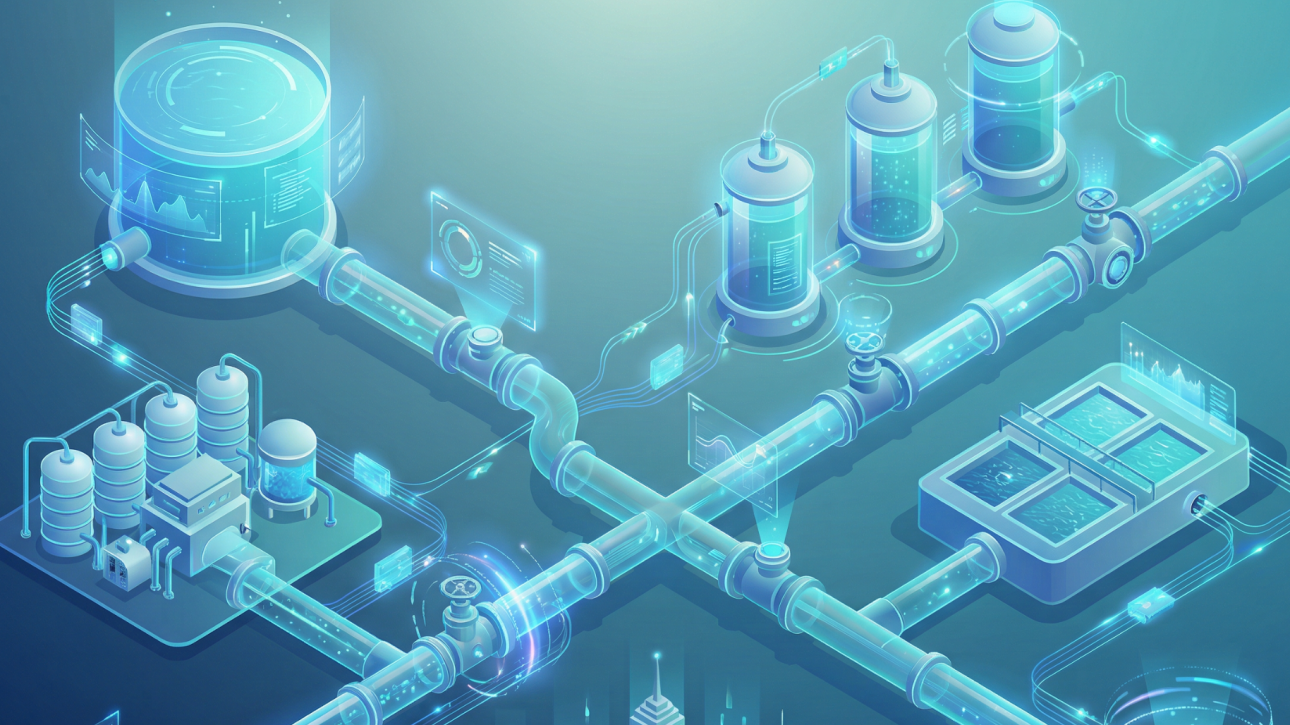
Traditional water networks are no longer sufficient to manage rising demand, regulatory pressure, and environmental risk. Smart water grids integrate IoT sensors, advanced metering, cloud platforms, AI analytics, and automation to transform static systems into intelligent, self-optimizing networks.
Key strategic benefits include:
Real-time leak detection and pressure…
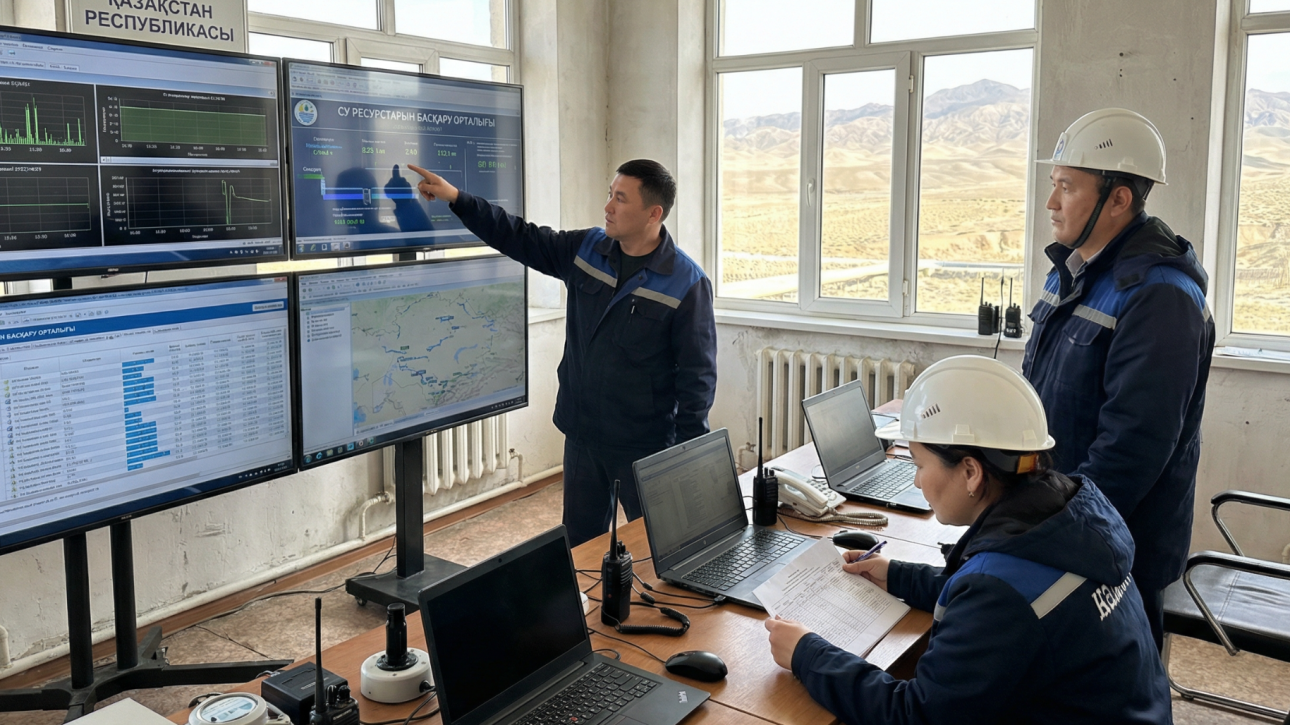
Water is emerging as one of the most decisive constraints on global economic growth. Climate volatility, urbanisation, and industrial demand are converging to expose weaknesses in legacy water systems-from Southern Europe to Central Asia and parts of North America.
Against this backdrop, Kazakhstan’s accelerated push into digital water management and infrastructure modernisation is not a…