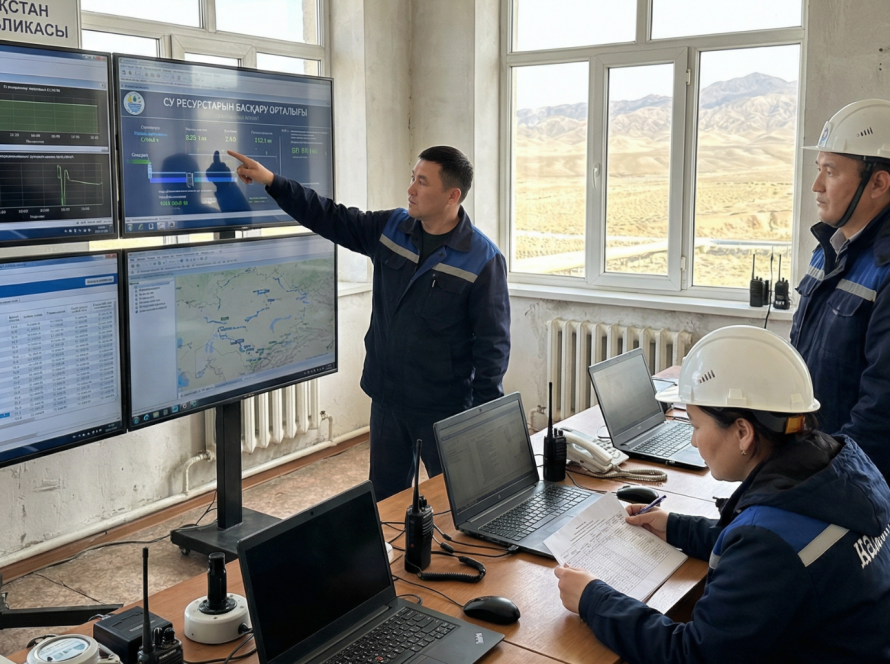
Why Smart Water Grids Are a Strategic Priority
Traditional water networks are no longer sufficient to manage rising demand, regulatory pressure, and environmental risk. Smart water grids integrate IoT sensors, advanced metering, cloud platforms, AI analytics, and automation to transform static systems into intelligent, self-optimizing networks.
Key strategic benefits include:
- Real-time leak detection and pressure optimization
- Significant reduction in non-revenue water (NRW)
- Predictive maintenance and extended asset lifespan
- Energy efficiency and lower operational expenditure
- Data-driven conservation and demand forecasting
In an increasingly resource-constrained world, smart water grids are becoming mission-critical infrastructure rather than optional upgrades.
United States: Digital Water Innovation at Scale
Recent industry developments demonstrate how the U.S. is operationalizing smart water grid technologies:
- Xylem deployed a digital twin of a major U.S. city’s water distribution network, enabling utilities to simulate pressure zones, identify leaks, and optimize pump energy-reducing NRW and operational costs.
- Badger Meter introduced cellular-enabled smart meters with acoustic leak detection, allowing municipalities to detect service-line failures before disruption occurs.
- Itron partnered with a cloud provider to deliver water analytics as a service, helping utilities engage consumers and manage demand during drought conditions.
- The U.S. Environmental Protection Agency (EPA) announced targeted funding to digitize water systems in underserved communities, advancing both infrastructure modernization and equity.
These initiatives reflect a broader shift toward predictive, data-centric water governance across the United States.
Japan: Precision Engineering Meets Digital Water Management
Japan’s smart water grid advancements highlight how technology can address demographic and infrastructure challenges:
- Toshiba Infrastructure Systems launched a cloud-based platform integrating multiple SCADA systems for centralized control.
- Yokogawa Electric introduced AI-powered pressure control systems to prevent pipe bursts and extend the life of aging pipelines.
- Azbil Corporation deployed LPWAN-enabled smart meters to reduce labor dependency in rural municipalities.
- Metawater Co., Ltd. tested drone-based thermal inspection for aqueducts, improving maintenance efficiency in hard-to-access areas.
These developments position smart water grids as a solution not only for efficiency, but also for workforce shortages and infrastructure longevity.
Market Drivers Reshaping Executive Decision-Making
The expansion of the smart water grid market is driven by several converging forces:
- Regulatory mandates for water conservation and ESG compliance
- Smart city initiatives and infrastructure modernization programs
- Rising urban and industrial water demand
- Integration of water and energy management systems
- Public-private partnerships and government funding
Advances in analytics, automation, and cybersecurity are further strengthening system reliability, making smart water grids a strategic investment for long-term resilience.
Competitive Landscape
The market is led by global technology and infrastructure leaders, including:
IBM Corporation, Siemens AG, Xylem Inc., Schneider Electric SE, Honeywell International Inc., ABB Group, Itron Inc., Badger Meter, Aclara Technologies LLC, and Trimble Inc.
These organizations are defining the future of secure, intelligent, and scalable water infrastructure worldwide.
Know about: How U.S. Water Utilities Must Evolve for the Next Decade
C-Suite Takeaway
Smart water grids are rapidly becoming the digital backbone of national water security strategies. For senior executives, the opportunity lies in aligning capital investment, digital transformation, and sustainability objectives to unlock operational efficiency and long-term value.
As climate risk and infrastructure stress intensify, leaders who invest early in smart water grid technologies will define the next decade of resilient, sustainable growth.