

Introduction: Water Is No Longer Just a Resource - It’s Infrastructure
The Asian Infrastructure Investment Bank (AIIB) has repositioned the global water cycle as critical infrastructure in its flagship Asian Infrastructure Finance 2026 report titled Where the Water Flows.
This marks a structural shift in how water is viewed - moving beyond extraction, utility management, or environmental risk, and toward recognition as a foundational system underpinning global economic stability.
For C-level executives, this is not an environmental narrative. It is…
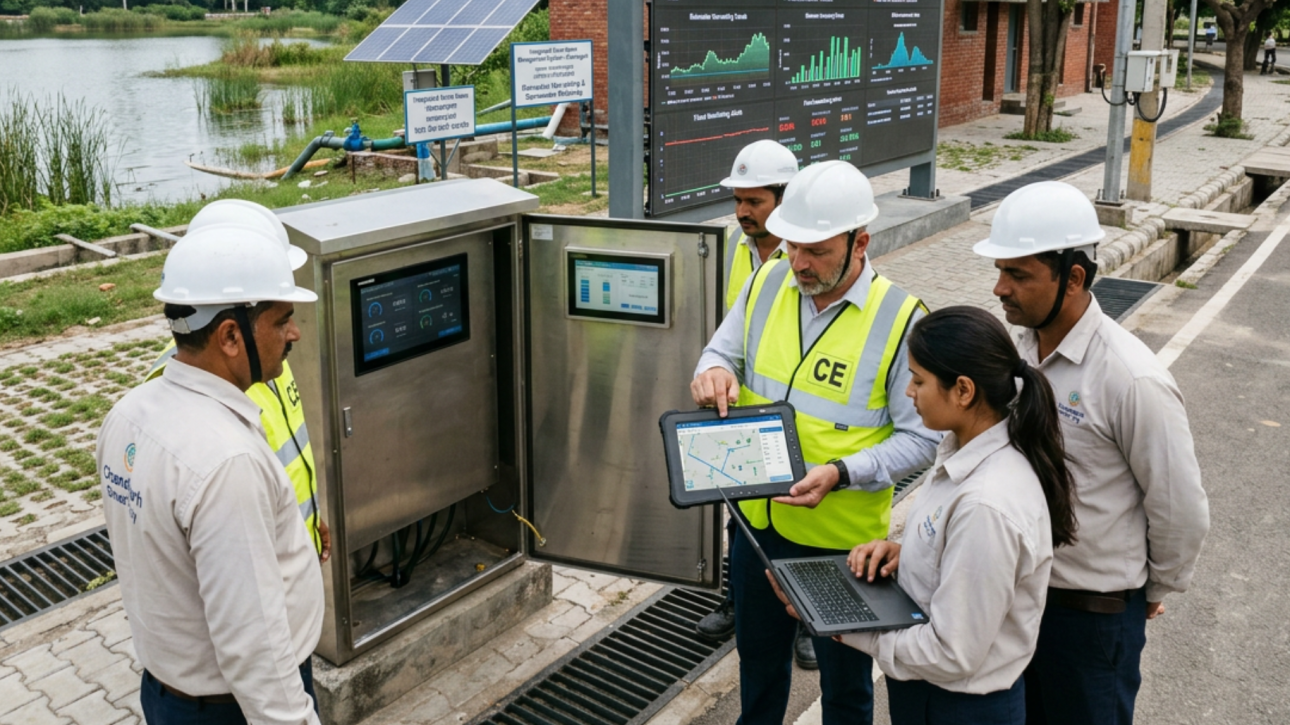
Chandigarh is taking a major step toward urban water sustainability in 2026 with the proposal of a dedicated City Water Management Cell aimed at strengthening long-term water governance and infrastructure efficiency.
The initiative is designed to build a data-driven, resilient, and sustainable water management system for the city.
Integrated Urban Water Strategy
The proposed action plan focuses on a multi-layered approach to water management, combining infrastructure upgrades with digital governance tools.
Key focus areas include:
Groundwater regulation and monitoring
Expansion…

EU Accelerates Strategic Shift Toward AI-Driven, Climate-Resilient Water Infrastructure
The European Union is driving a coordinated transformation in water infrastructure strategy, signaling a decisive move toward digitally enabled, climate-resilient utility systems. Across policy frameworks and funding ecosystems, the emphasis is shifting from traditional water management toward intelligent, data-driven infrastructure networks.
For C-level executives in utilities, infrastructure development, and environmental technology, this represents a structural market shift: water systems are evolving into AI-powered, predictive, and continuously optimized assets.
Water Infrastructure Is…
Introduction: Water Is No Longer Just a Resource - It’s Infrastructure
The Asian Infrastructure Investment Bank (AIIB) has repositioned the global water cycle as critical infrastructure in its flagship Asian Infrastructure Finance 2026 report titled Where the Water Flows.
This marks a structural shift in how water is viewed - moving beyond extraction, utility management, or environmental risk, and toward recognition as a foundational system underpinning global economic stability.
For C-level executives, this is not an environmental narrative. It is…
Chandigarh is taking a major step toward urban water sustainability in 2026 with the proposal of a dedicated City Water Management Cell aimed at strengthening long-term water governance and infrastructure efficiency.
The initiative is designed to build a data-driven, resilient, and sustainable water management system for the city.
Integrated Urban Water Strategy
The proposed action plan focuses on a multi-layered approach to water management, combining infrastructure upgrades with digital governance tools.
Key focus areas include:
Groundwater regulation and monitoring
Expansion…
EU Accelerates Strategic Shift Toward AI-Driven, Climate-Resilient Water Infrastructure
The European Union is driving a coordinated transformation in water infrastructure strategy, signaling a decisive move toward digitally enabled, climate-resilient utility systems. Across policy frameworks and funding ecosystems, the emphasis is shifting from traditional water management toward intelligent, data-driven infrastructure networks.
For C-level executives in utilities, infrastructure development, and environmental technology, this represents a structural market shift: water systems are evolving into AI-powered, predictive, and continuously optimized assets.
Water Infrastructure Is…